Evgraf Andreievich Zhivago
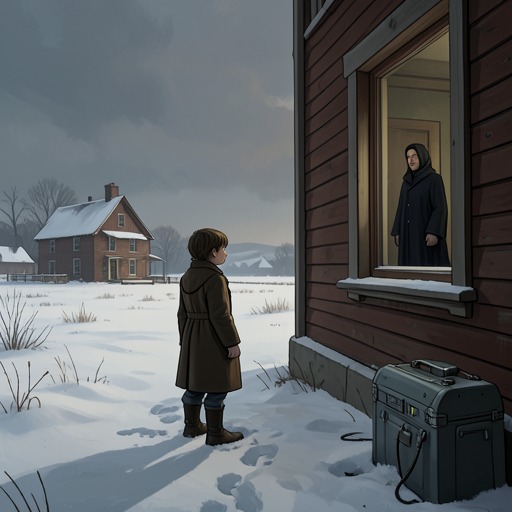
Doctor ZhivagoEvgraf Andreievich Zhivago is the younger paternal half-brother of Yurii Andreievich Zhivago, the son of Andrei Zhivago and Princess Stolbunova-Enrici. The novel first makes him present through what Yurii learns about his father’s other family: a ten-year-old boy living with his reclusive mother near Omsk, at a distance that seems to Yurii both geographical and almost supernatural.
Identity and Family Background
Evgraf is Andrei Zhivago’s son by Princess Stolbunova-Enrici, conceived while Andrei’s wife, Maria Nikolaievna Zhivago, was still alive. He is therefore Yurii’s half-brother, sharing a father but not a mother. The family account identifies him as the child of an affair and places him outside the household in which Yurii grew up.
The news reaches Yurii amid discussion of claims against Andrei’s estate. He explains that the lawyers have made a case of the inheritance because the estate might cover their fees, although he considers it burdened by debts and disorder rather than a real fortune. Among the competing claimants is a woman in Paris who calls herself Zhivago; the newly disclosed claim is rooted in the existence of Evgraf and his mother. The inheritance dispute thus opens onto a more intimate fact: Andrei’s family was larger, and less settled, than Yurii had known.
The Siberian Household
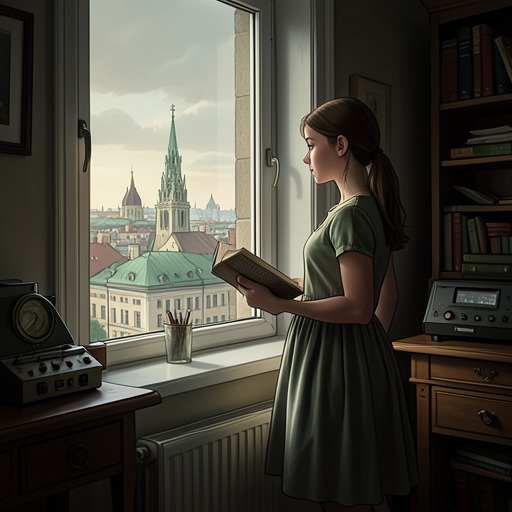
Yurii describes the Princess as a recluse who lives in a house just outside Omsk and never goes out. He has seen a photograph of it: a handsome building with five French windows and stucco medallions along the cornices. The precise architectural details make the distant household strikingly tangible, even as its occupants remain beyond Yurii’s reach.
The house acquires an uncanny force in Yurii’s imagination. He says he has lately felt that it is staring at him nastily through all five windows, across the thousands of miles between Siberia and Moscow, as if it might give him the evil eye. The image turns a photograph into an imagined gaze: Evgraf’s unseen home seems to look back at Yurii, making the newly discovered family claim feel less like a legal abstraction than a presence directed toward him.
The Inheritance and Evgraf’s Narrative Place
Yurii says he has relinquished his claim because he regards the supposed capital as imaginary and the rival claims as false or confused; he does not want lawyers, malice, and envy stirred up around what he considers nonexistent property. The evidence does not establish Evgraf’s own role in the dispute or give him a direct voice in it. Instead, he enters the story through Yurii’s account of his father’s past and through the distant household associated with his birth.
That indirect introduction gives Evgraf a particular narrative significance. He is at once a concrete child—ten years old, with a mother and a home near Omsk—and a sign of the family secrets and unsettled obligations left by Andrei. His presence complicates Yurii’s understanding of inheritance: what is passed down is not simply property, but a scattered, imperfect family history whose claims cannot be made tidy by legal renunciation.